Field Notes
Your firm is renting its capacity to reason
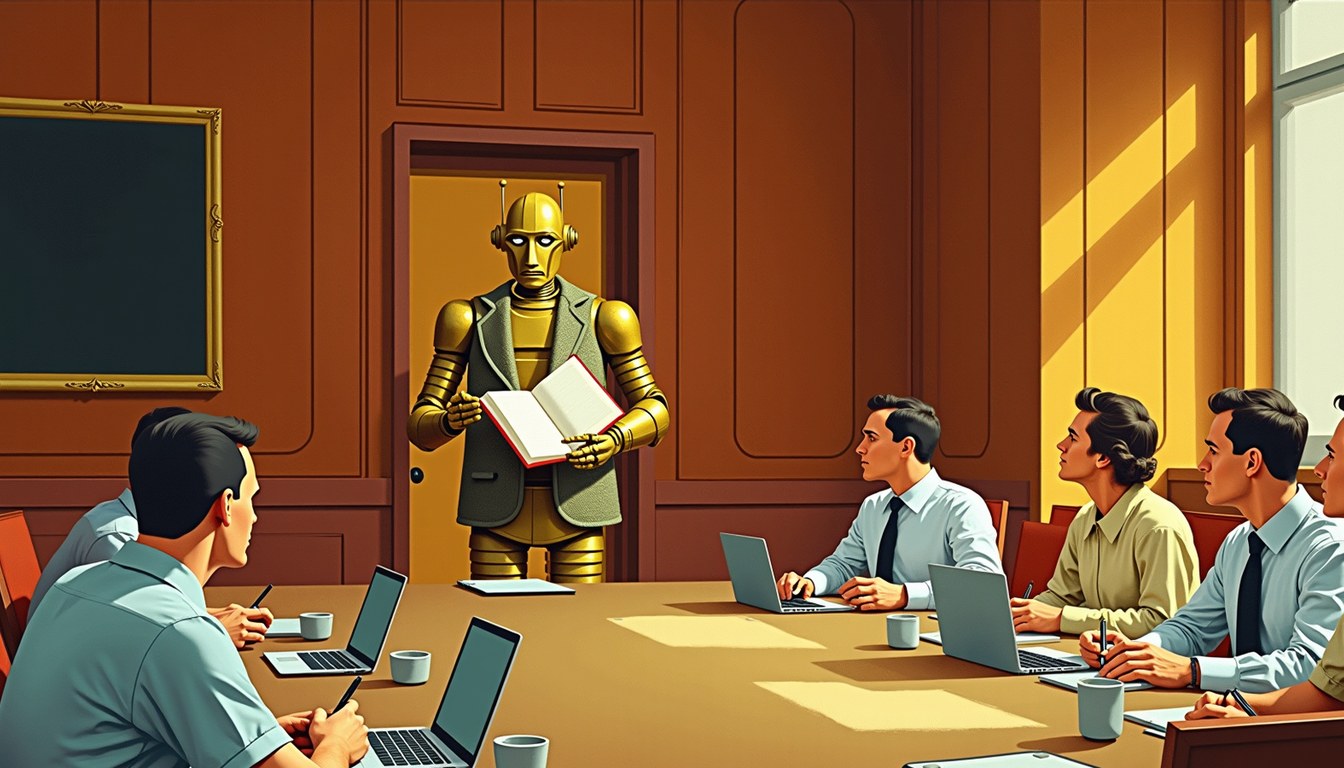
In 2002 Adam Curtis made The Century of the Self, an unsettling television series about Edward Bernays. Bernays was Sigmund Freud's nephew, and he grasped that the surest route to a customer's wallet ran through the part of the mind the customer never consulted. On his advice cigarettes were rechristened "torches of freedom". Citizens were recast as consumers, and a generation learnt to declare its identity at the till.
Curtis ended with Tony Blair and the focus group. A sequel would have to be shot on a direct debit mandate. The self is now held on a monthly tenancy, and the latest clause added to the agreement covers the capacity to reason.
Paying monthly for a better you
The direct debits on a British bank statement add up to a portrait of the person its owner aspires to become. There is the gym and the app that reminds you to breathe. There is the premium tier of the app that informs your acquaintances you have run 5k. Then there is the car on PCP, which assures the neighbours you are prospering. Strictly speaking, it certifies only that you will be prospering for the next 36 months.
Gyms grasped the economics years ago. Their solvency rests on members who enrolled in January and have been conspicuous by their absence ever since. The customer purchases the notion of fitness, and attendance merely wears out the rowing machine. Bernays wished desire to be perpetual. The subscription obliges, levies a monthly fee for it, and secretes the cancellation button somewhere towards the back of the app.
Then the office signed up
I use AI for almost everything, so I am poorly placed to sneer. Firms now procure licences by the month. The drafting, the précis and the first attempt at an argument used to take place inside people's heads, and now take place in a data centre none of them will ever visit.
Here the analogy with the gym collapses. Let your gym membership lapse and you are merely as unfit as the day you enrolled. Let the AI lapse after three years of delegating your reasoning to it and you may find yourself diminished, because the faculty that once did the work has spent three years in indolent retirement on the sofa.
Whether that atrophy is real remains unsettled, and the literature is at odds with itself. In 2025, researchers at Microsoft and Carnegie Mellon surveyed 319 knowledge workers. The more those workers trusted the AI, the less effort they devoted to scrutinising what it produced, while those confident in their own ability scrutinised more. A Polish study in The Lancet Gastroenterology & Hepatology looked at experienced endoscopists who had grown accustomed to an AI polyp detector. With the AI switched off, their detection rate fell from 28.4 per cent to 22.4 per cent. A Norwegian study this year found no significant change when the AI was withdrawn. Authors on both papers have ties to the manufacturers of the systems they tested.
Firms tally the hours saved, because that is the figure the invoice invites them to admire. What their people could still accomplish with the thing switched off is a less flattering calculation, and one I seldom see attempted.
When the landlord rearranges the furniture
Tenancy carries a further hazard. In August 2025 OpenAI launched GPT-5 and withdrew the older models from ChatGPT overnight. People whose working methods depended on those models protested with such vehemence that the company reinstated GPT-4o within days, before announcing it would retire the model regardless. A firm's methods can be rearranged peremptorily, on a timetable set by people who have never heard of it. Meanwhile everything typed in goes to the landlord: the drafts, the half-formed thoughts, the client's predicament before anyone has given it a name.
Plato complained about writing
In the Phaedrus, Socrates laments that writing will enfeeble the memory. Humanity has rented out its intellect ever since: to libraries, calculators and search engines, and to consultants who charge a day rate to relay what your own staff told them on Tuesday. I built websites in Perl in the late nineties. I could not compose a line of it today and have never once mourned its passing. Long division suffered the same fate, and the economy proceeded unperturbed.
Plenty of skills can be surrendered with impunity. Two cannot: establishing what the problem is, and detecting when the answer is wrong. Together they make up the ability to reason a matter through, and they are how you catch the machine in a fabrication. Let them wither and its errors pass unchallenged, with your signature appended.
What a firm can own
A firm's reasoning, once committed to paper, is portable. Its working rules, its review checklists, the prompts its people have refined and its record of why decisions were taken are all text, and text belongs to its author. That is the asset worth holding, and the model is interchangeable. Running a model on your own hardware is the intellectual equivalent of buying the freehold on a cottage when you could have leased a penthouse: smaller, slower and damp in places, but immune to rent reviews.
I cannot say where the line falls, and I suspect it falls differently for a hospital than for an advertising agency. There is, however, a question any board procuring licences might put on a Monday morning. If the subscription lapsed today, what could your people still reason out for themselves this afternoon, and has anyone checked?